
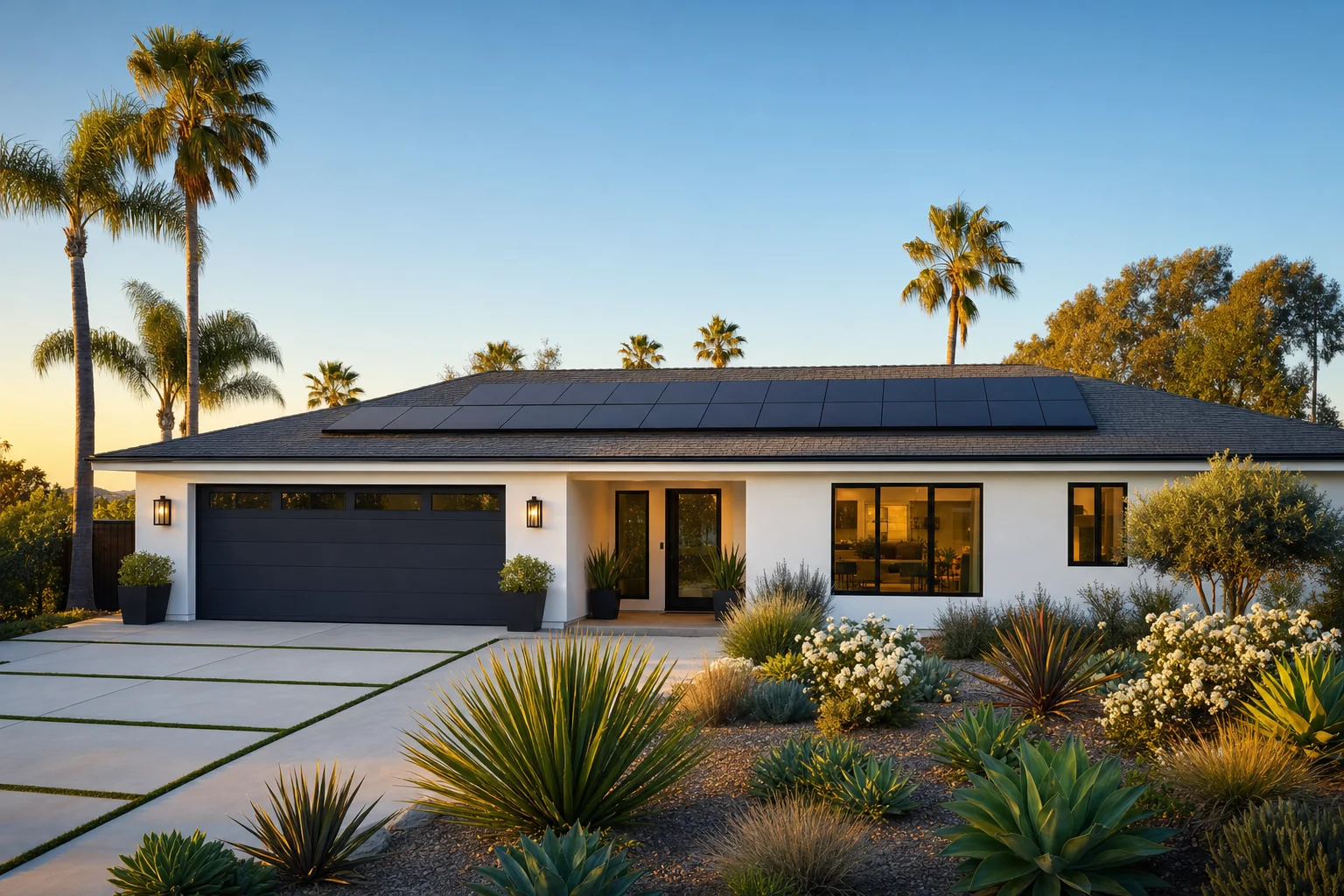
Time-of-use rates mean California electricity costs more during peak evening hours and less off-peak. The way to beat the peak is to shift usage and store daytime solar in a battery, then draw on it in the evening instead of buying expensive grid power. This is why solar plus storage works so well.
Most California homes are billed on time-of-use rates, where the price of electricity changes by the hour. Understanding when your power is most expensive is the key to cutting your bill, and it explains why solar paired with a battery is so effective. This guide breaks down how the rates work and how to beat the peak.
How Time-of-Use Rates Work
Under time-of-use pricing, electricity costs the most during peak hours, typically in the late afternoon and evening, and less during off-peak hours. The aim is to discourage grid use when demand is highest. For a typical household, the evening peak is exactly when people get home and turn everything on.
Why the Evening Peak Matters
Solar produces most of its power at midday, when rates are lower, and little in the evening, when rates are highest. Without storage, you sell cheap midday power and buy expensive evening power. That gap is the core challenge time-of-use rates create for solar-only homes.
Beating the Peak With Storage
A battery closes the gap. It stores your midday solar and discharges it through the evening peak, so you cover your most expensive hours with your own energy. Shifting flexible loads, like EV charging and laundry, into off-peak or solar hours adds further savings.
- Power costs the most in the late afternoon and evening.
- Solar peaks at midday, the opposite of when rates peak.
- A battery shifts solar into the evening peak to cut the bill.
- Move flexible loads to off-peak or solar hours.